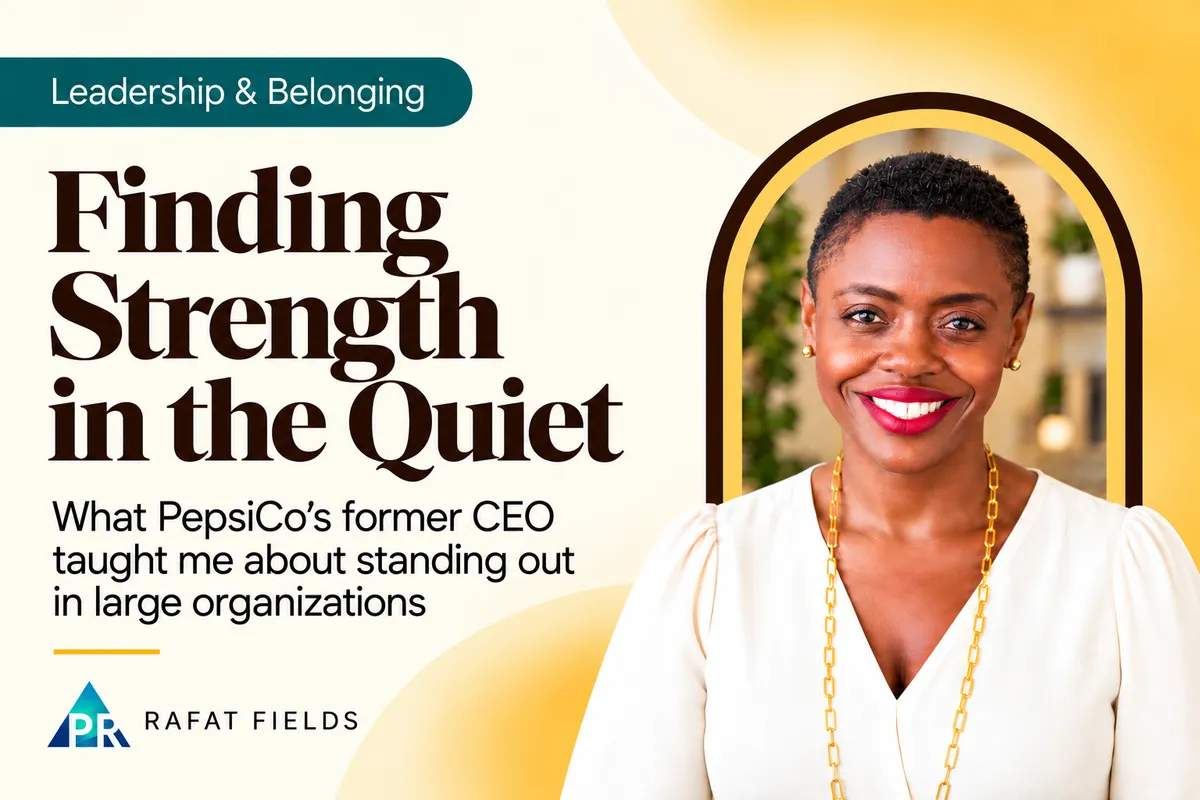
How to Become Known Inside a Very Big Company
🎧 Prefer to listen to this article?
Generated using my voice clone assistant in ElevenLabs with the Eleven v4 model, described as being their most emotive model yet. I have to say, I definitely agree. Take a listen and let me know when you notice for sure it’s an AI-generated voice. Learn more about Eleven Labs here.
Long before I knew the language of personal branding, Indra Nooyi gave me a framework for becoming known inside a Fortune 500 company. It changed the trajectory of the next two decades of my life.
Early in my corporate career, I had a problem.
I knew I was more than my number.
But I worked in sales.
And in this line of work, your number can walk into the room before you do.
Your quota. Your territory performance. Your stack ranking.
Those numbers matter. Of course they do. But they don't necessarily show the difference you make in creating the result.
They don't show your judgment.
They don't show how you listen.
They don't show the way you connect dots, solve problems, influence people or help the people around you get better.
I had come out of Florida A&M University's business school steeped in leadership development. I had been trained to study companies, understand business and think differently about how organizations worked.
Then I entered these enormous Fortune 500 environments and found myself asking a much more personal question:
How in the world do I make my leadership stand out in a system this big?

I went looking for leadership I could recognize.
Part of my answer was finding people whose attributes helped me imagine my own.
I was absolutely looking for Black women.
There were painfully few examples of us sitting in the highest seats of Fortune 500 companies, so I also paid close attention to other women of color who had navigated those environments.
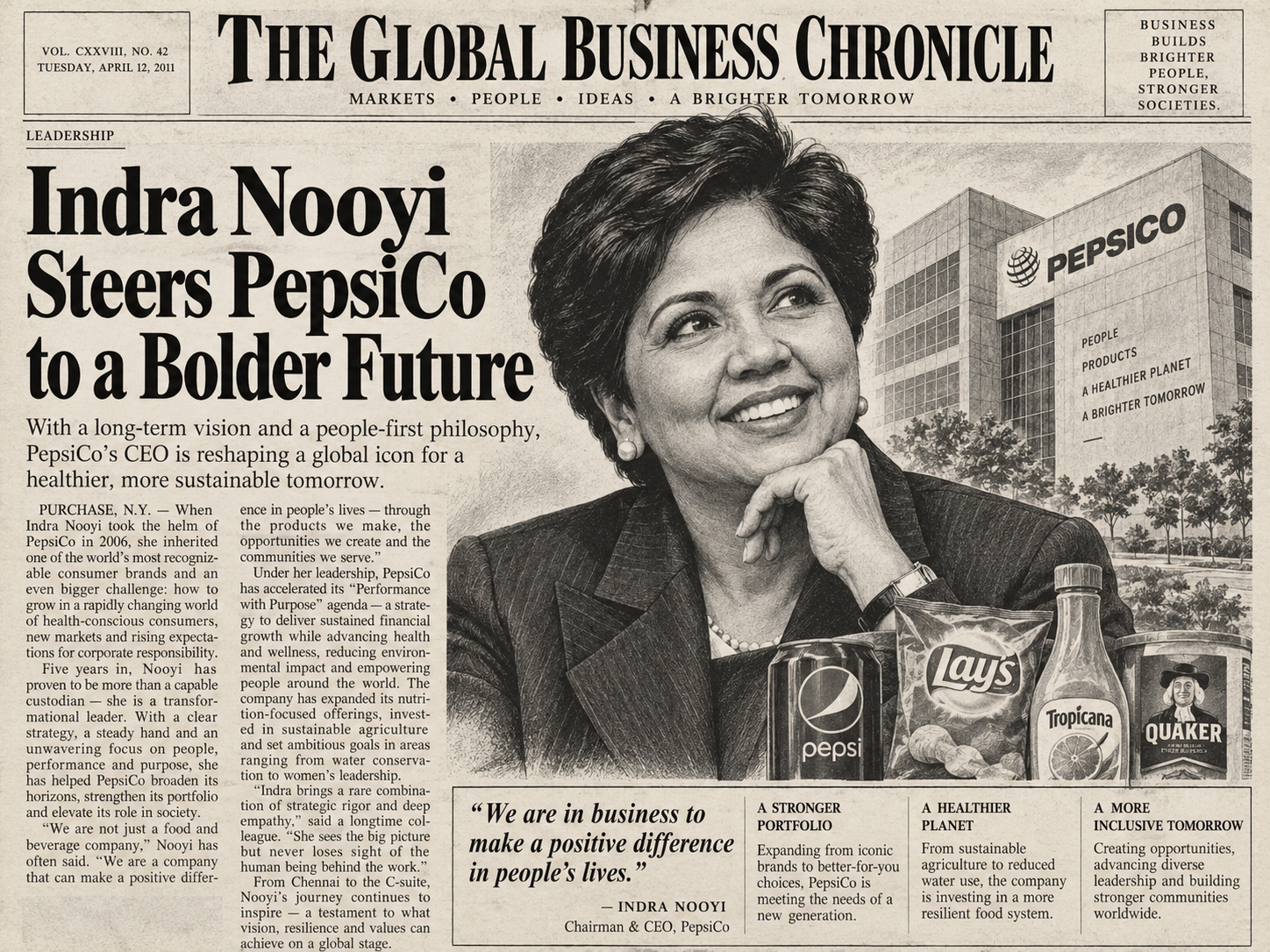
Indra Nooyi became one of those beacons of hope for me.
There were little threads connecting her story to mine.
I grew up in Chicago. Quaker Oats had a major presence there before becoming part of PepsiCo. I grew up around young people getting early exposure to large corporations through programs like INROADS. Later, at FAMU, studying major companies and reading The Wall Street Journal was part of my business education.
So PepsiCo wasn't some distant abstraction to me.
And here was this woman leading it.
But representation wasn't the only thing that held my attention.
I was drawn to how Nooyi seemed to think.
Analytical. Thoughtful. Precise.
She could sit with complexity and then communicate it clearly.
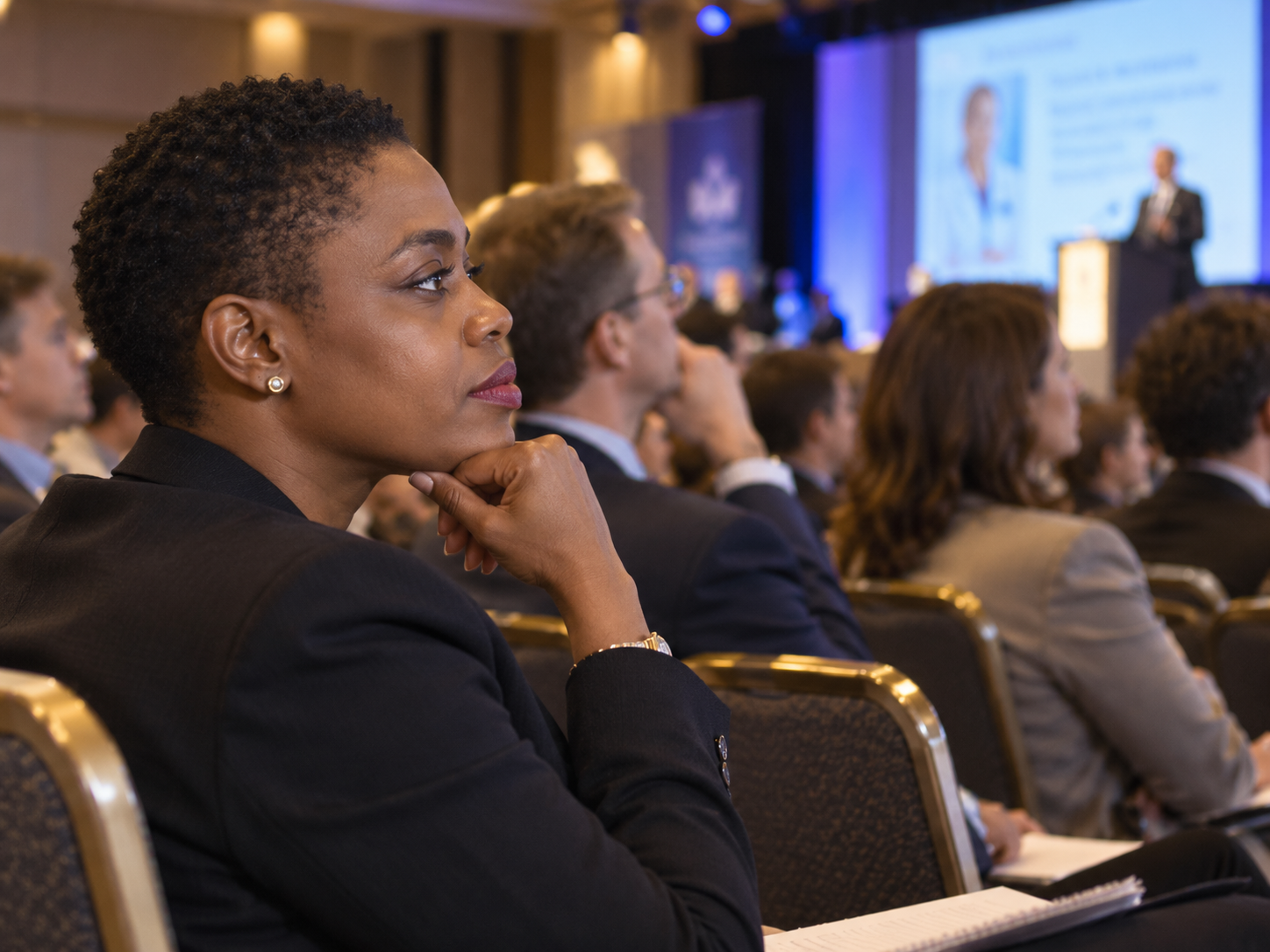
That landed with me because I wasn't the typical charismatic sales leader. No one was ever going to accuse me of needing to be the loudest person in the room.
I could sit quietly.
Listen.
Connect threads.
And then offer a perspective that had been carefully considered.
Watching leaders like Nooyi helped me understand that I didn't necessarily need to become someone else to lead.
I needed to understand what was valuable about the way I led.
Then I found the idea that changed everything.
During those early years, I encountered Nooyi's perspective on developing what she called a “hip pocket skill.” The idea stayed with me.
I found a 2019 LinkedIn Learning interview that I'm sharing here because her wisdom feels just as relevant for leaders today as it did when I was trying to find my way nearly 20 years ago. In it, she offered three pieces of career advice: become exceptionally good at the job you have now, develop a hip pocket skill, and build an ethical compass you have both the courage and communication skills to defend.
That second idea lodged itself in my brain.
A hip pocket skill.
Nooyi described it as something you become so good at that people across the organization begin to recognize you as the person to call when that particular problem appears. Her own example was making complicated problems simple.
I kept turning the idea over.
What could that be for me?
Around that time, several market forces were reshaping my medical device sales territory at once.
Ohio was expanding the percentage of lives covered under a managed Medicaid operational structure. At the same time, major employers in the region—including GM plants—were closing. People who had been covered through commercial insurance were losing jobs and, in many cases, moving onto Medicaid.
The result was a significant shift in the payer mix across my geography.
That volatility meant I couldn't simply keep pushing harder in the same parts of the business and expect the territory to stabilize. I had to analyze the market differently:
Where could we still compete and deliver value to customers?
Medicare emerged as one of the clearest opportunities.
But there was a formidable barrier.
Because of the way the benefit was structured at the time, growing that segment required navigating a mail-order process that could be operationally complex. Clinicians had to understand the prior authorization procedures, documentation requirements and paperwork well enough to move patients through it successfully.
If I wanted Medicare to become a meaningful source of growth—and help offset volatility in other payer segments—I needed to master understanding of that process enough to make it easier for other people to navigate.
So I dove deep.
Not because someone handed me a development plan and said, "Rafat, this should become your niche."
I studied the territory, identified where the opportunity was, found the barrier standing in front of it and then built the expertise necessary to help climb that hill.
And this is a pattern I have traced throughout my career:

Even when I think I understand something, I want to hear from the people actually fighting the good fight.
How do they describe the problem?
Where are they getting stuck?
What words do they use when they're trying to explain it?
Because understanding the answer isn't enough.
If I can't translate that answer into language that makes sense inside the mind of the person trying to use it, I haven't finished the work.
So I learned the details.
I learned how to explain the changing environment to clinicians.
I learned how to translate what was happening in the field back to managers.
I learned how to take regulatory requirements, customer realities and business strategy and connect them.
And gradually, something happened.
People began to associate my name with the problem.

Becoming known for that work led to my selection for a cross-functional sales and marketing committee.
That gave me exposure to more leaders.
Those relationships and that visibility helped create the runway for another opportunity: a highly selective rotational assignment that moved one person from the sales organization into the home office.
I got the rotation.
And that role eventually helped me make the jump from sales into marketing.
Looking backward, I can draw the line pretty clearly:
I encountered the idea of the hip pocket skill.
I chose an important problem.
I went deep enough to become useful beyond my own territory.
People began associating my name with that capability.
That reputation created access to new rooms.
Those rooms changed my career.
At the time, I wouldn't have called any of this personal branding.
Today, I absolutely would.

We sometimes speak about it as though it begins with social media.
Post consistently.
Create a profile.
Develop a content strategy.
Those things can accelerate the growth of a personal brand.
They aren't where it begins.
Your brand originates much closer to the work.
It is what people think of when your name comes to mind.
Call her when “x” gets complicated.
He understands this customer better than anyone.
She can walk into the mess and make sense of it.
Give this problem to them.
That's brand.
And this is why Nooyi's advice still resonates with me.
The three ideas work together.
Quality earns trust.
Do the work in front of you exceptionally well.
Your hip pocket skill creates distinction.
Become unusually useful around a problem that matters.
Your compass creates leadership.
Know what you stand for, and develop the courage and communication skills to articulate it when the moment requires you to.
Excellence gets noticed.
Distinctiveness makes you memorable.
But values determine what you do when people finally start listening.

That may be the part of this story I appreciate most now.
For a long time, I was trying to understand how my version of leadership fit inside environments where the leaders getting recognized didn't always look, sound or operate like me.
My search and study of mentor models didn't guide me to replicate Indra Nooyi’s brand of success.
Instead, her reflections on how she developed her career helped me recognize something that already existed in me.
My ability to simplify the complex in a different way.
To listen deeply enough to understand how other people experience a problem.
To connect strategy across different layers of an organization.
To teach.
To help install capability in other people.
Those became recurring themes throughout my career.
Sometimes a mentor never knows your name.
They may work in another company, another industry or come from outside your own cultural background.
But something they say gives vocabulary to an intangible concept you have been trying to understand about yourself.
That language becomes a compass.
And occasionally, one little idea becomes a door.
Source: How to Become a CEO, According to Indra Nooyi: Focus on These 3 Things
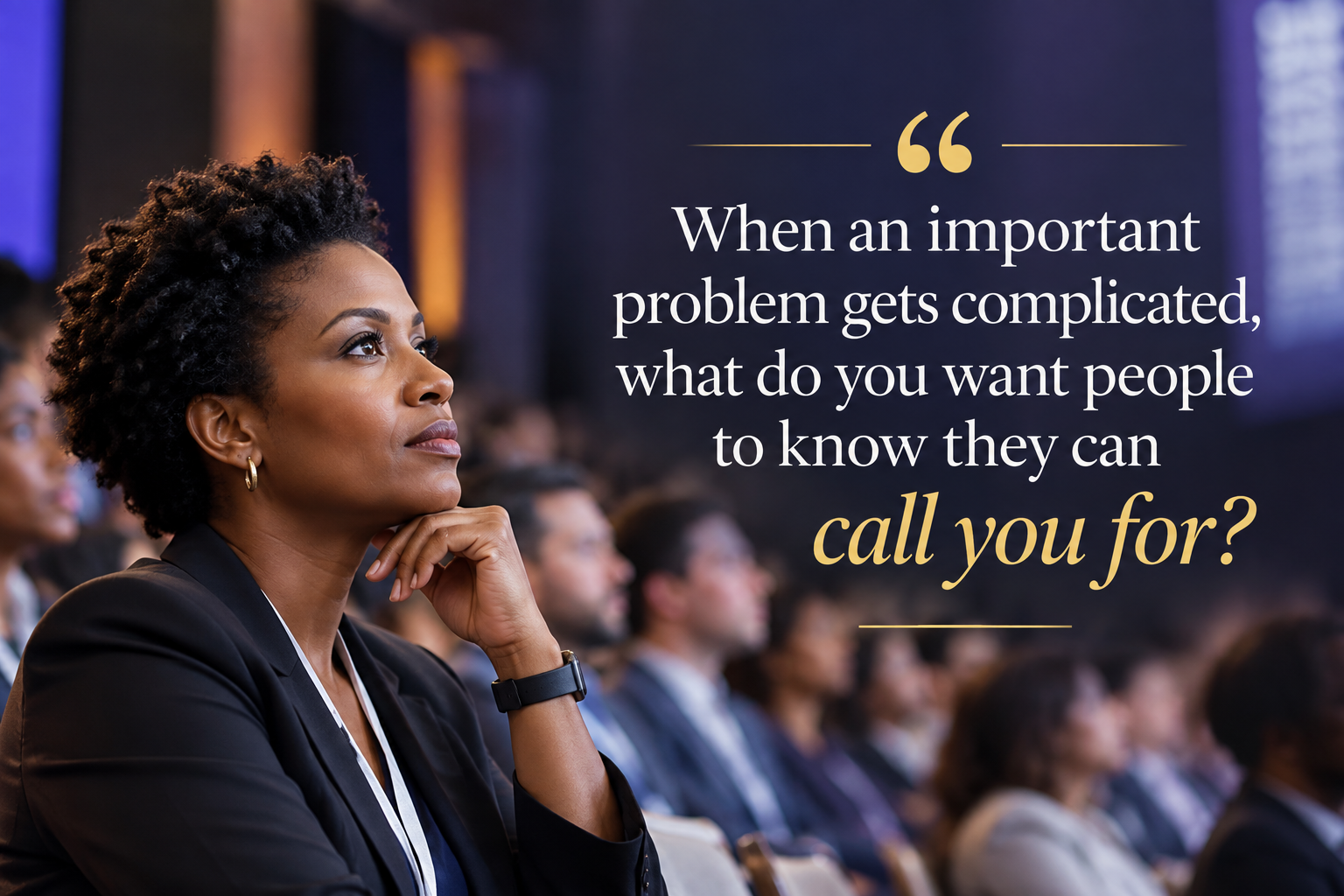
Twenty years later, the question I would put in your pocket is a simple one:
💌 Want more reflections like this?
Subscribe to The Human Advantage for essays, practical ideas, and updates from Rafat on leadership, AI, work, and building systems that keep humans at the center.
Sign up for The Human Advantage Newsletter + updates from Rafat