Designing the Program: What COSI Taught Us About Legacy and Leadership

When we walked through the doors of COSI this past weekend, I felt something shift. Calvin stayed back at the hotel, laptop open, working through his day while the boys and I ventured out. Remote work has been one of those quiet blessings—the flexibility to say yes to a weekend trip to Columbus, to let work happen in a hotel room while family memories get made down the street.
The Center of Science and Industry has always been special to our family, but returning after time away brought a clarity I hadn't expected. The dinosaurs still roared. The Pixar exhibit still dazzled. Yet what struck me most wasn't what filled the exhibition halls—it was who leads them.
Dr. Frederick Bertley, the president and CEO of COSI, represents something profoundly rare: a Black man at the helm of a major science institution, shaping not just what gets displayed, but how young minds encounter possibility itself.
When Distance Sharpens What Proximity Softened
During our years in Columbus, I knew COSI was led by Dr. Bertley. I appreciated it. Yet living inside that reality, I didn't fully grasp its singularity. Distance has a way of sharpening perspective. When you leave and come back, you see what others don't have. You recognize what you once took as normal is actually quite extraordinary.
My childhood was shaped by similar spaces. Growing up in Chicago, the Museum of Science and Industry left imprints so deep that decades later, I can still describe the coal miners exhibit, the railroad car, even the machine that let you make an ashtray to take home. These weren't just field trips. They were invitations to imagine myself inside worlds I hadn't yet entered.
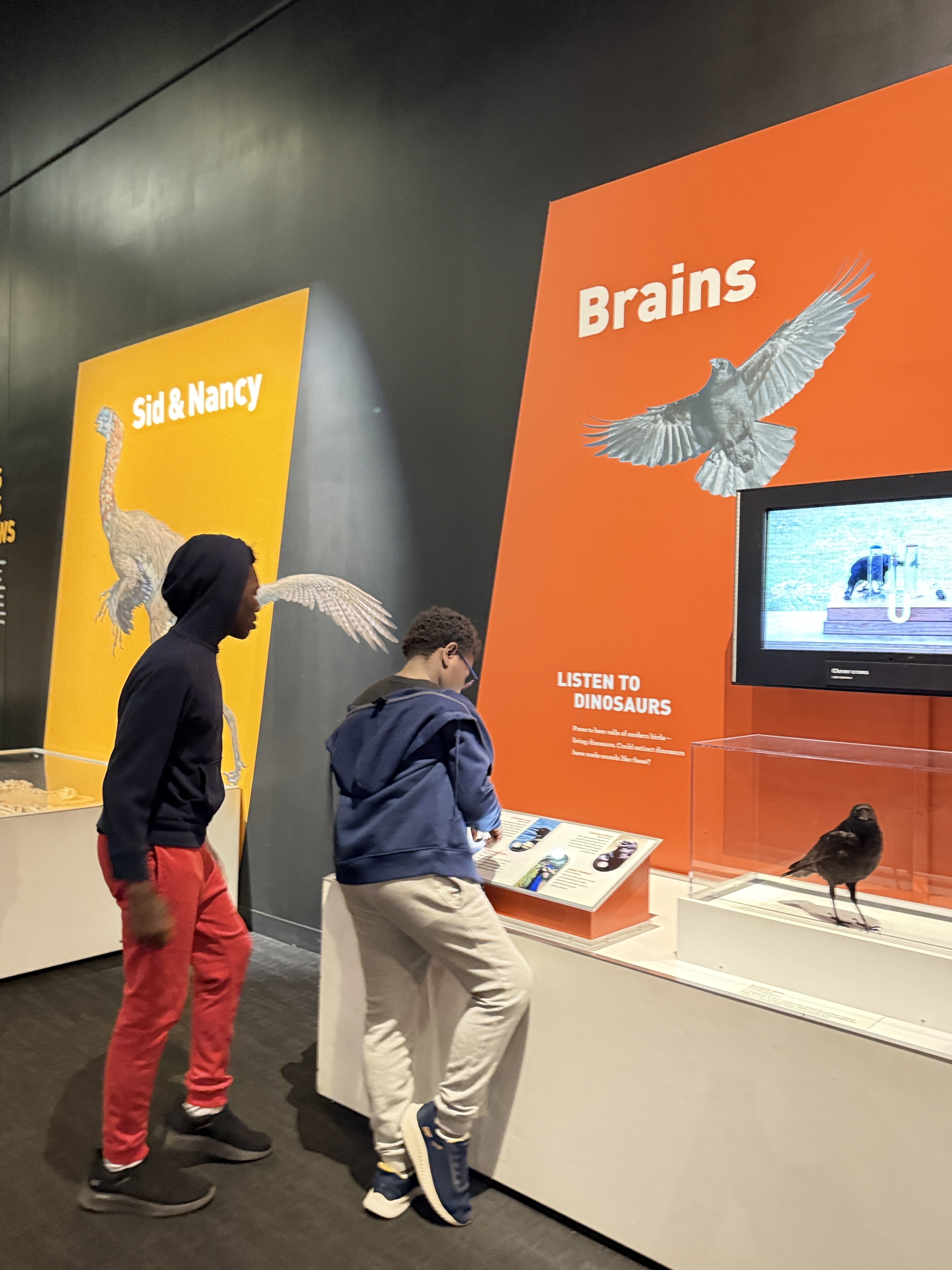
COSI has done that for my boys. It has been a place where their minds could wander, where curiosity wasn't confined to a worksheet, where science felt alive. What I'm learning now, with the perspective of distance, is how much Dr. Bertley's leadership shaped that experience—not just for us, but for every family who walks through those doors.
Of course, my boys are not me. They do not want to linger over every plaque, read every description, ponder every implication. I have approximately two hours—two generous hours if the exhibits are good—before the groans start. The shuffling feet. The pointed glances at the exit. The inevitable "Mom, can we leave now?"
I am a woman who could spend an entire day in a museum, turning over information like stones in a river, examining each one for what it reveals. My sons are decidedly not cut from that cloth. They move fast, engage hard, and tap out when their curiosity runs dry. It's a dance we do: I plot our route strategically, they burn through exhibits with focused intensity, and somewhere around the 90-minute mark, I start negotiating for just one more thing before we go.
Planting Seeds They'll Recognize as Trees
Our boys are 14 and 11. They're at the age where the world is starting to reveal itself in more complex terms. They're old enough to understand role models, but still young enough that I can plant seeds without burdening them with the full weight of systemic inequality.
I want them to know that Dr. Bertley exists. I want them to see a Black man designing the programming, not just participating in it. There's a profound difference between those two postures, and it's a difference I'm learning to name for them with intention.
Society is skilled at showing Black people how to contribute our talents in service to others. We're taught to work hard, to excel, to pour ourselves into systems that benefit everyone. That narrative has deep roots—roots that stretch back to slavery, through Reconstruction, into the present day. Service is valuable. Community matters. Yet there's a distinction between choosing to serve and being conditioned to believe that service is our only option.
What I want my boys to understand is agency. The power to design. The capacity to build the systems, not just navigate them. Dr. Bertley represents that distinction. He doesn't just work at COSI—he shapes what COSI becomes. He determines which exhibits get funded, which stories get told, which communities get invited in.
That's the legacy I'm trying to build with my boys: the knowledge that they can be architects, not just participants.
Architects of the Experience, Not Just Visitors to It
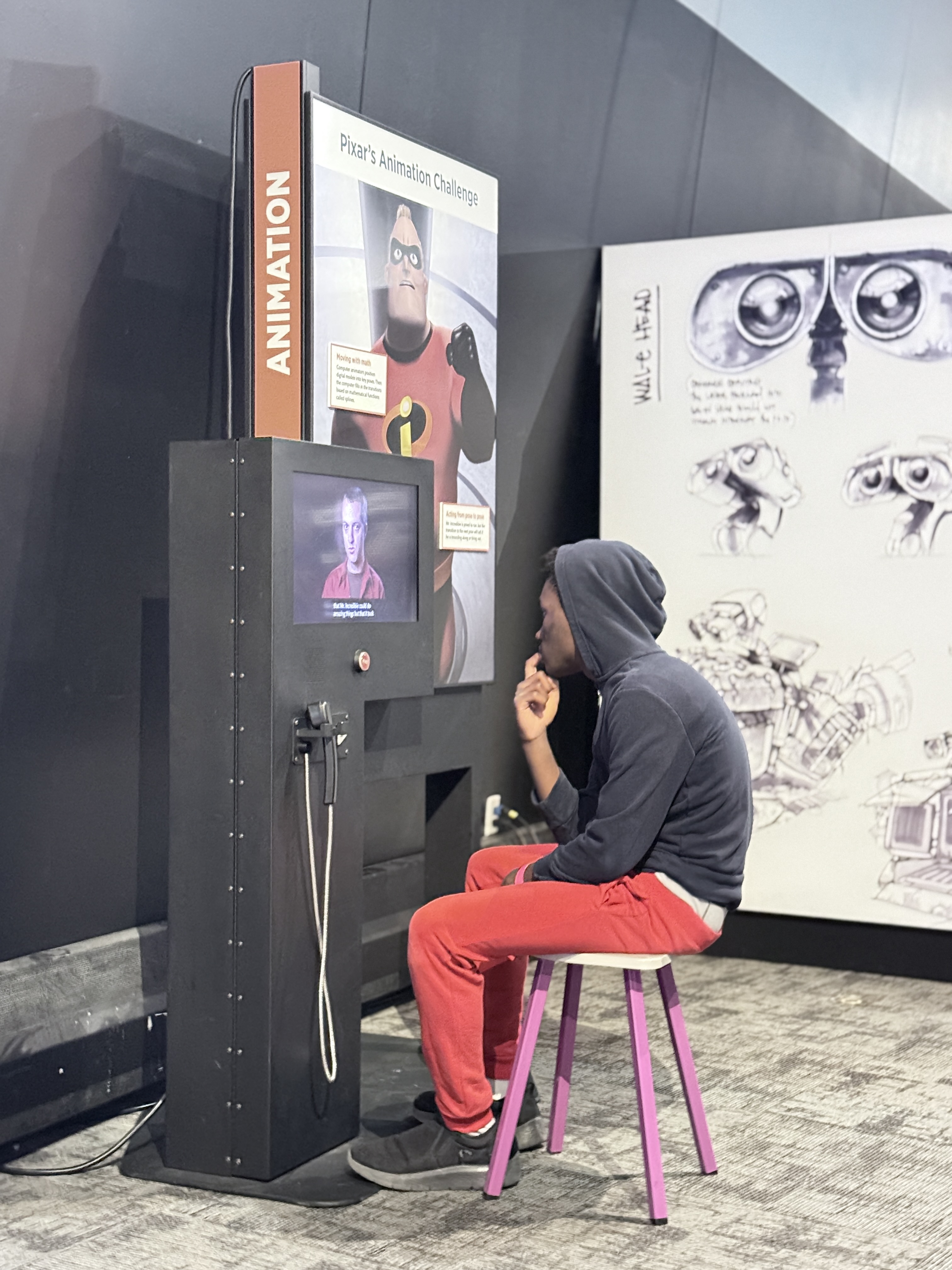
The Pixar exhibit gave us a window into this distinction—and it caught Jonathan's attention in a way that bought me an extra twenty minutes of engagement before the restlessness set in. Jonathan has always had an orientation toward digital arts, and watching him move through that exhibit, I could see his mind opening to possibilities I can't fully guide him toward. The storyboarding, the character modeling, the collaborative process of bringing animation to life—these are careers I've never worked in, industries I don't intimately understand.
What the exhibit did was reveal the many roles it takes to create the stories we love. It showed him that someone has to design how Buzz Lightyear moves, how Toy Story unfolds, how emotion translates through animated characters. Someone programs the experience; others participate in it by watching the film.
This distinction matters more than I can articulate right now. We're living through a moment of technological transformation, and I worry deeply about whether our communities are being prepared to design the future or simply survive it. When the job market resets—and it will reset—who will have the skills to build the new systems? Who will be positioned to benefit from the expansion, not just endure the contraction?
This is why visiting COSI mattered so much. This is why I wanted my boys to see Dr. Bertley's name, to understand his role, to recognize that leadership matters. Not just in science institutions, but everywhere. Who gets to design the systems that shape our lives? Who gets to determine what possibilities look like for the next generation?
The Inheritance We Choose to Leave
This trip to Columbus reminded me that legacy isn't built in grand gestures. It's built in the everyday choices we make about where we go, what we pay attention to, whose stories we elevate.
Dr. Bertley built a legacy by leading COSI with excellence and vision. My mom built a legacy by raising me with a love of history and museums, planting seeds that grew into the curiosity that still drives me.
I'm trying to build a legacy with my boys. One where they see themselves as designers, not just participants. One where they understand that Black leadership isn't just symbolic—it creates different opportunities, different programming, different futures. One where they know that the systems they inherit were built by people, which means people can rebuild them.
COSI will always be special to us. Not just because of the exhibits or the experiences, but because of what it represents: a place where a Black man decided what possibilities looked like, and invited everyone in to explore them.
That's the kind of world I want my boys to help build.
Explore the World of Cosi:
The visionary leader - Dr. Frederic Bertley


