Sharing a Hero With My Sons: Bringing Muhammad Ali’s Story to Life With AI
Muhammad Ali has been a personal hero of mine for as long as I can remember. His story — the conviction, the courage, the refusal to separate who he was from what he stood for — has shaped how I think about leadership and character more than almost anyone else I could name. So when it came time to pick a book for this month's AI leadership project, his story came to mind clearly and boldly.
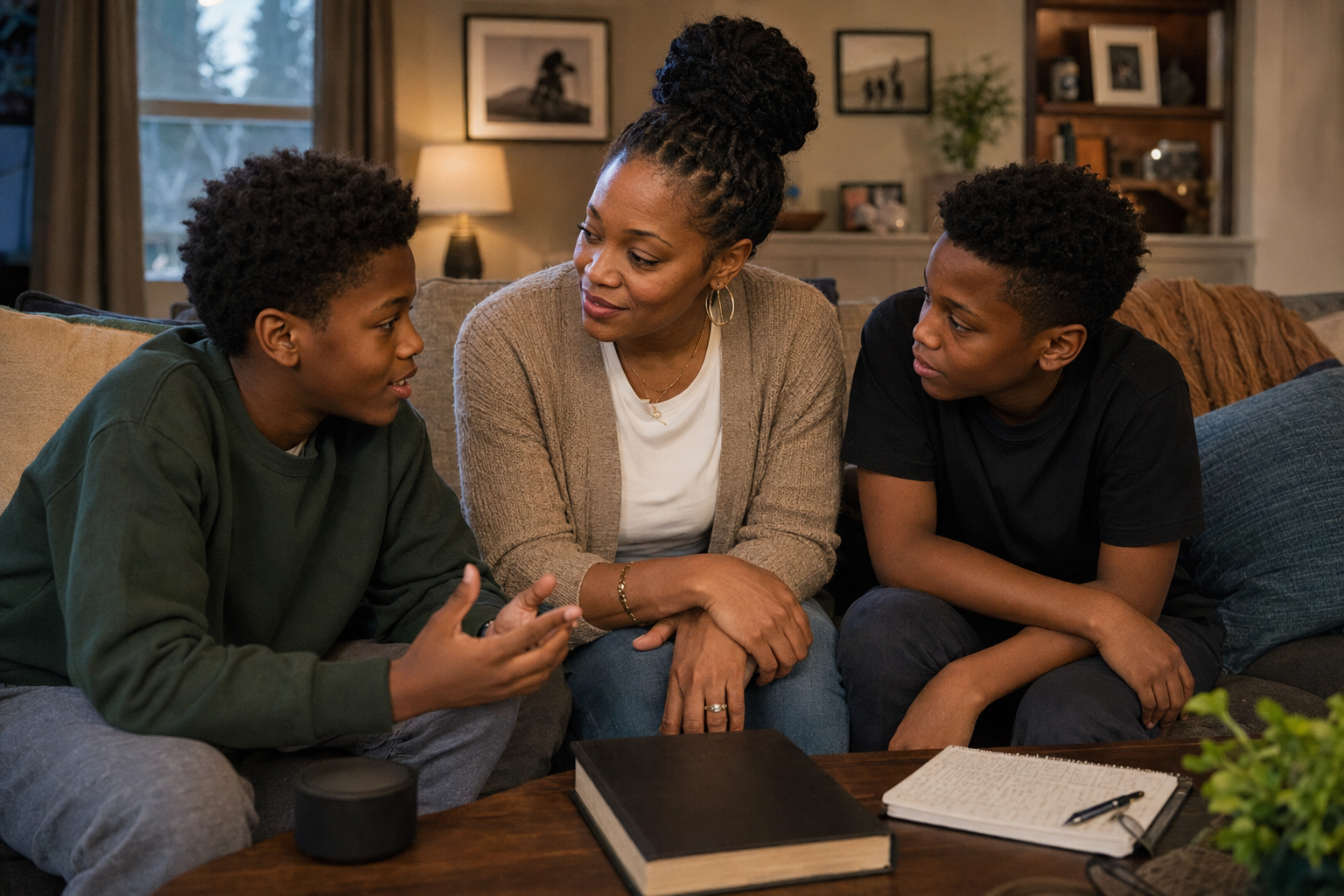
But there's a more personal reason I chose him, too. I'm a Gen X mom raising a Gen Z son and a Gen Alpha son — two boys who learn and process the world in a completely different way than I did growing up. Technology isn't a tool they reach for; it's the water they swim in. And one of the things I've genuinely struggled with as a parent is finding a way to give them the same emotional connection I have to the heroes of the Civil Rights era, and to Black history more broadly — not just the facts of what happened, but the feeling of it, the way it lived in me.
I got that connection from my mom. She was an educator — a teacher, and later in various administrative roles in the Chicago Public Schools system, where I grew up and where I spent nearly my entire education, kindergarten straight through college, aside from one brief quarter in a Catholic school before I came right back to public school. My mom's passion for teaching came with a deep, deliberate love of Black history that she instilled in me over years, not in a single lesson. I wanted to build that same bridge for my sons — a connection I could hand down, not just tell them about. Muhammad Ali's story felt like the right place to start: larger than life enough to hold their attention, human enough to make the history land as something more than a name in a textbook.
There's another layer to why he resonates so deeply with me. I discovered my love of weightlifting at 37 and touched a barbell for the first time at 38 — and I'd go on to train the Olympic lifts and compete on national stages. But competition, for me, has very little to do with the platform or the other lifters in the room. It's about competing with the version of me that existed yesterday, and finding a way to be 1% better than I was the day before. That drive toward self-mastery — toward becoming the greatest version of myself I could possibly be — had lived in me my entire life as an unexpressed seed. It just didn't break through the surface until I met the barbell at 38.
When I think about Muhammad Ali's story, that's the thread that runs through it for me. He found his love for boxing at an incredibly young age, and he held an unshakable conviction that he was destined to become the greatest — and then he poured everything into making that true, far beyond anything anyone ever witnessed of him in the ring. That kind of self-mastery, woven into a story that also carries the weight of growing up in the Civil Rights era, in segregated Kentucky, is exactly why he works as a hero for this project. He gives my boys a small window into who I am, and a real connection to a piece of Black history that matters — one they're inheriting very differently than I did.
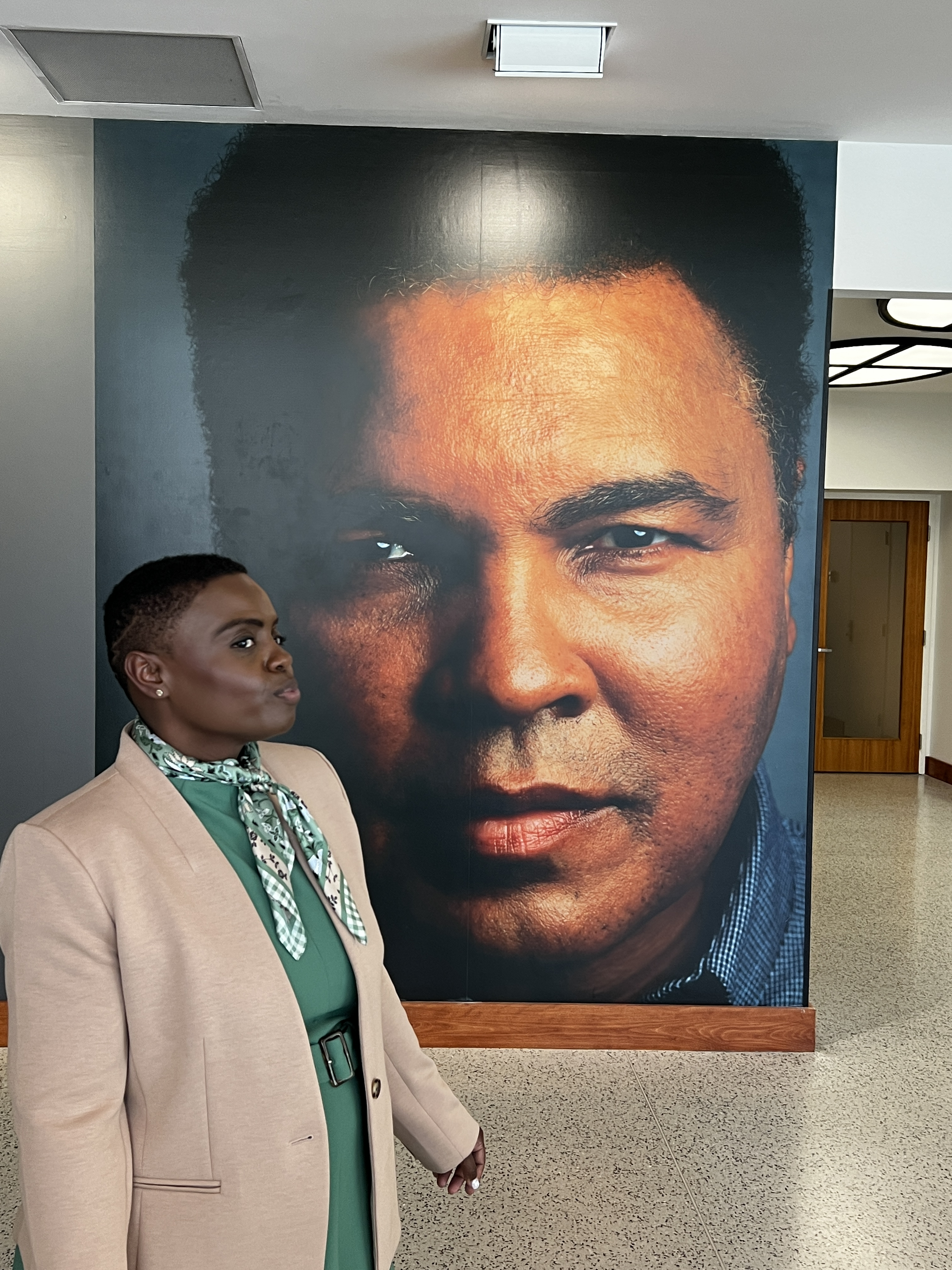
I have also had the chance to visit the Muhammad Ali Center in Louisville. Standing in that space, surrounded by the story of his life, made the connection feel even more tangible: Ali was not only a champion in the ring. He was a son, a student of his craft, a man of conviction, and a leader who used his voice when it mattered. It is a meaningful place to explore if his story is new to you or if, like me, you want to spend more time with the full humanity of the man behind the legend.
That's the personal "why." The practical "how" is what this project actually became: a chance to practice leading with AI on purpose — not in a work deliverable, but in something small enough to experiment freely — built around a story I wanted my boys to carry with them.
Here's how we're building it. We started with the audiobook Becoming Muhammad Ali. From there, we built a short lesson around it together — a set of discussion questions pulled from the moments in his life that stuck with us most, meant to spark conversation rather than test recall. Next, we turned those same moments into prompts an AI image-generation tool could use. This month, we are sharing the finished 16:9 storyboard presentation: full-screen images on the slides, with any narration living in speaker notes. In next month's Part 2, I'll walk through how that same presentation becomes an avatar-narrated video in Google Vids.

Our family happened to pick a book on Muhammad Ali. You can use this process with whatever book strikes your fancy: audiobook, conversation, notes, image prompts, a visual storyboard, then a video in part 2 next month. That process works with whatever characters hold meaning with you. Swap in a different subject entirely and the steps hold.
It also translates just as easily to a team project at work: a low-stakes, creative way to practice leading with AI tools without the pressure of getting it perfect. If your team is looking for a shared project that builds AI fluency without feeling like a training exercise, this is a format worth trying.
And if you build your own version of this — with your own book, your own family, or your own team — that's the whole idea. For me, this project was about handing my sons a way into a piece of history and a hero that matters deeply to me, in a language they're already fluent in. That's a small, repeatable piece of digital real estate too: visible proof of how you're building both your own AI leadership skill and the story you want the people you love to carry forward, one project at a time.


